Community Cellular Network Launched in Ocean View, Cape Town
Game changer for affordable access for townships and rural areas in South Africa
From the outset, we want to express our deep gratitude to the Internet Society Foundation for their generous support, which has made this work possible. We would also like to thank ICASA for providing us with a test license to carry out this trial and for entrusting us with the spectrum for this important, potentially game-changing project.
For just over two decades, community networks across the world have relied primarily on WiFi for last-mile access apart from a handful of community cellular networks in rural communities in places like Mexico and Papua New Guinea. WiFi has been transformative: low-cost, license-exempt spectrum with minimal regulatory overhead, and hardware that is affordable and widely available. Within the constraints of shared spectrum, mainly power limits and coexistence protocols, it has enabled communities to build their own infrastructure without applying for costly spectrum licenses.
For backhaul and point-to-point links, WiFi-based systems can achieve impressive distances and throughput at a fraction of the cost of licensed spectrum solutions. But one limitation has always been an archilles heal: the range for a mobile handset.
When connecting directly to a phone, The maximum WiFi range is typically 50 meters if you are lucky under good line-of-sight conditions. Introduce walls, trees, or elevation changes, and the effective range drops dramatically. LTE, by contrast, was designed for wide-area mobility. A standard LTE handset can comfortably reach 4 km from a base station, and in lower-frequency rural deployments, even 10 km is possible. However, until recently, LTE has largely been confined to large national mobile operators, companies able to invest tens of millions of dollars in spectrum licenses before even deploying their first base station
Historically, however, LTE has been financially out of reach for most community networks. The radio hardware is more expensive than WiFi, the core network and subscriber management systems are costly, easily costing tens of thousands of dollars, and only large national mobile operators are able to invest tens of millions of dollars in spectrum licenses. That barrier to entry is now beginning to fall, with regulatory access to LTE spectrum becoming the final piece of the puzzle that will unlock a connectivity revolution.
In early February 2026, we launched a community cellular network in Ocean View, Cape Town, built around the Baicells Nova 227; a compact LTE base station costing approximately $1,500.
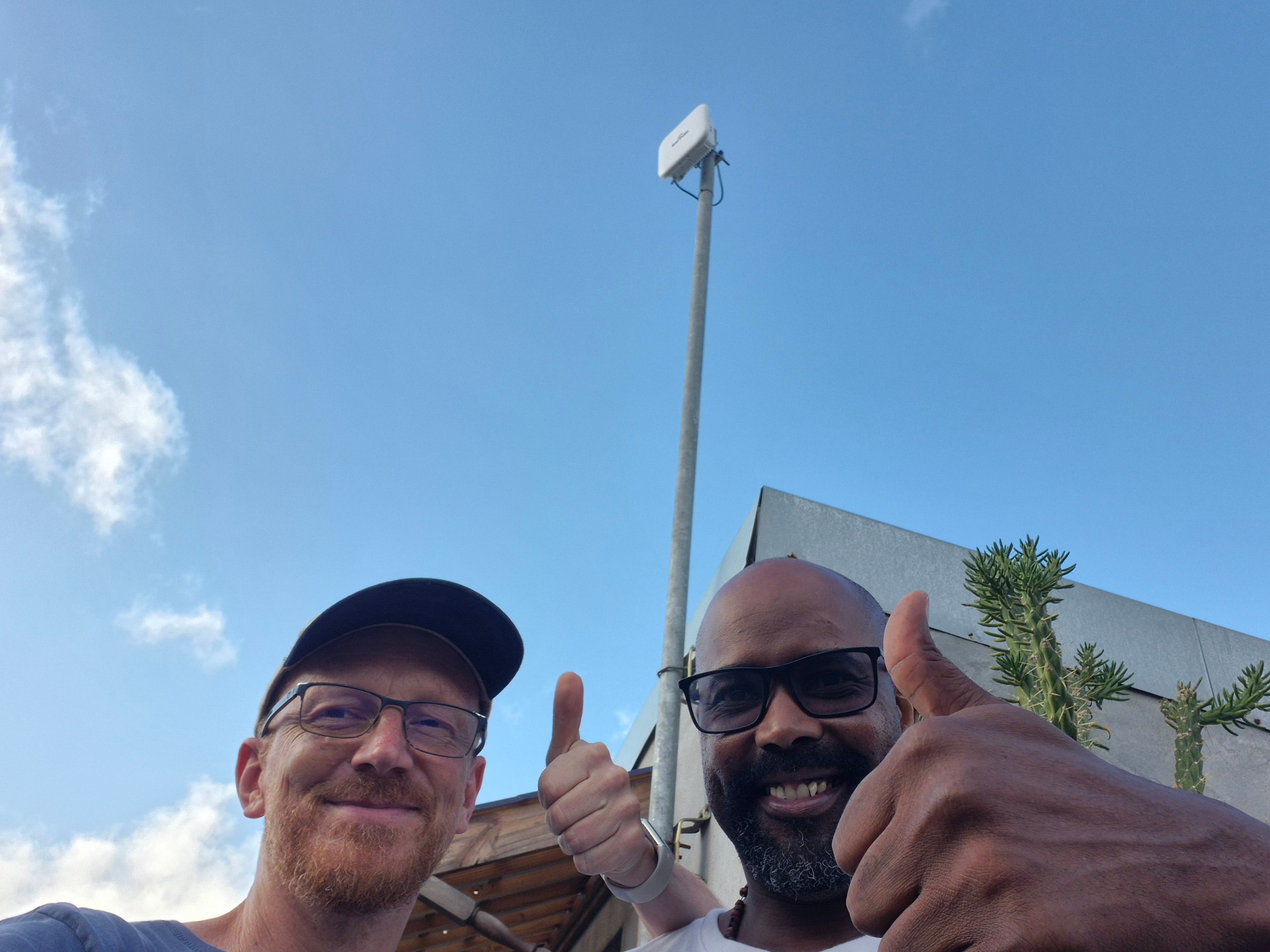
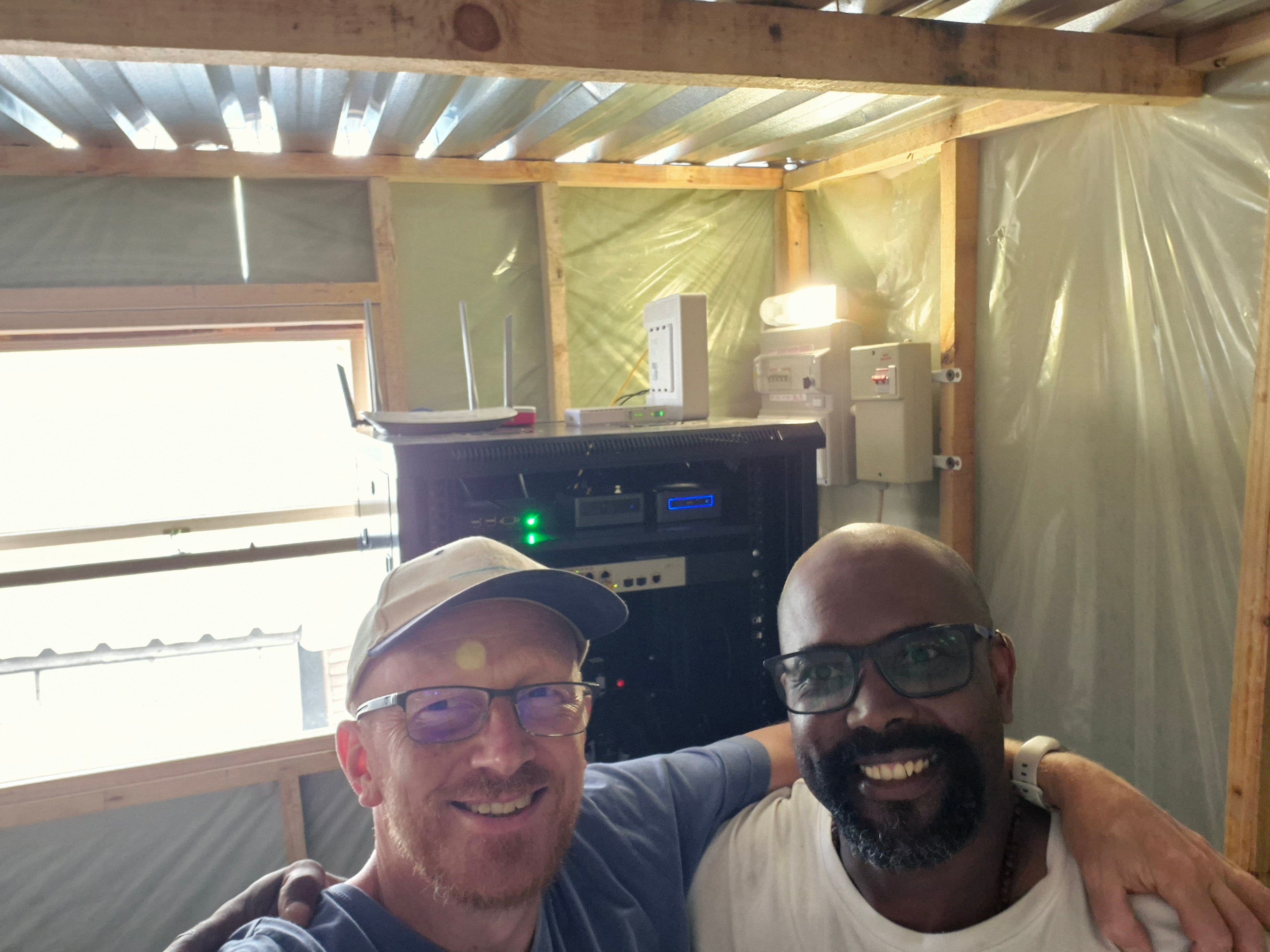
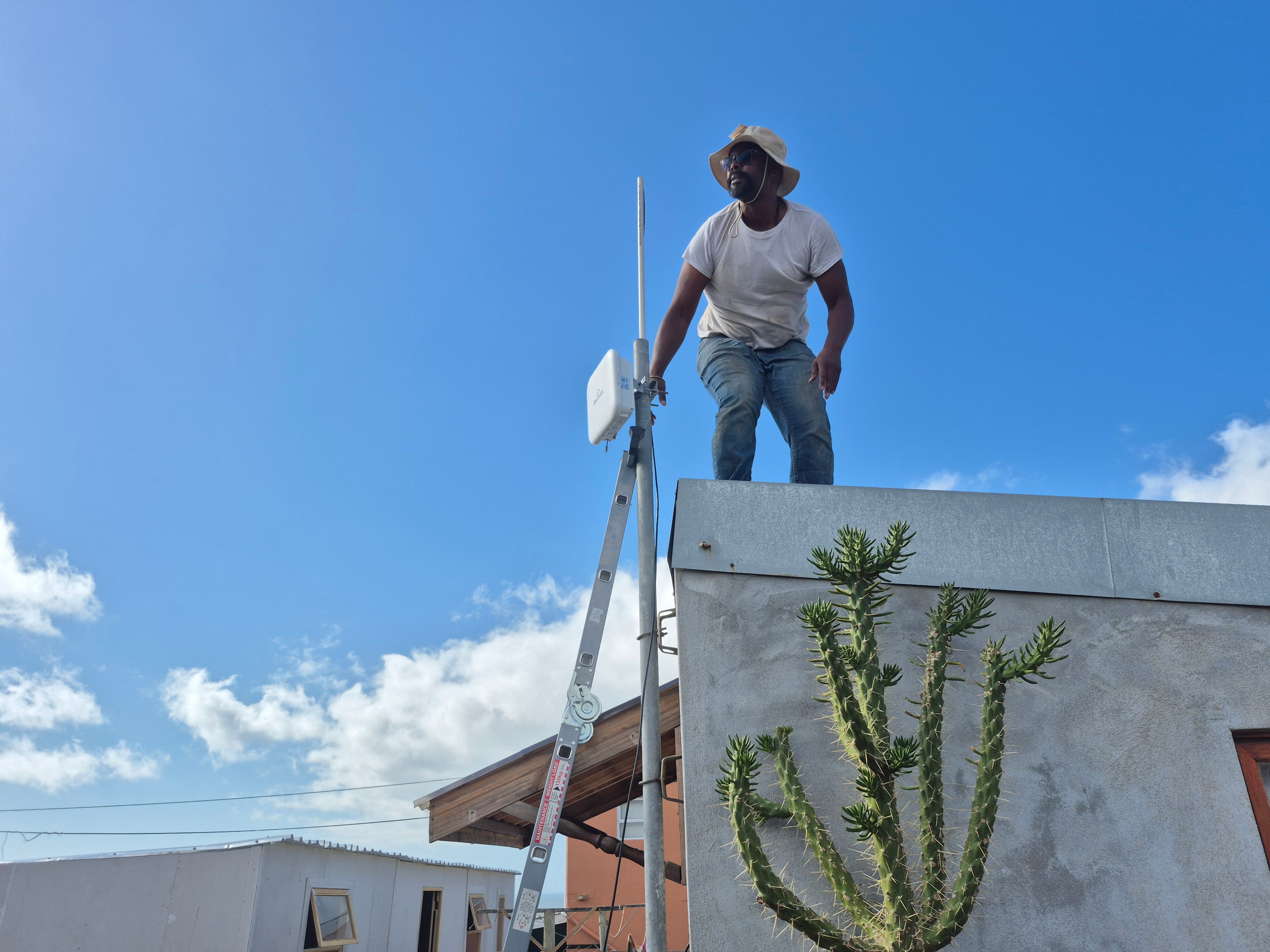
What has surprised us most is not only that it works, but how well it works.
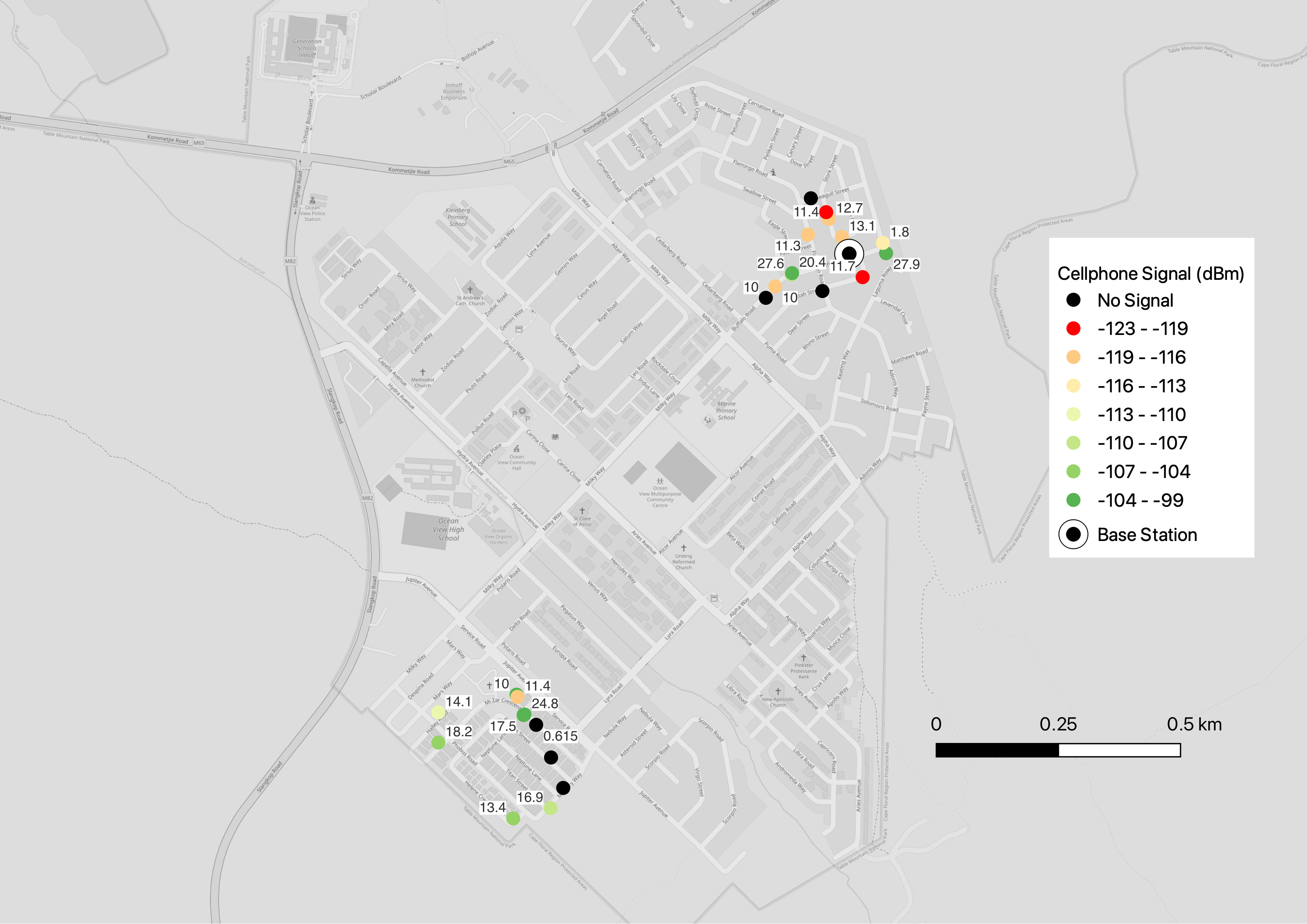
The Nova 227 is operating at 20 dBm, roughly the same transmit power as a typical WiFi access point. By comparison, conventional macro LTE base stations often operate between 43 and 48 dBm (20–63 watts). Despite the relatively low power, we have achieved coverage of up to 1.2 km while delivering around 10 Mbps. In the same terrain, WiFi connectivity to handsets was limited to roughly 30–50 meters.
In the map below, each dot represents a measurement of signal strength, indicated by its color, along with the corresponding speeds we achieved to our server (in Mbps). Speeds rarely fell below 10 Mbps, even at distances exceeding 1 km. Black dots indicate locations with no connection, typically where building clutter or other obstacles blocked the signal.
The radio performance alone would have been significant. But the deeper achievement lies in how the network is structured and built fully on open-source techology.
Instead of deploying a proprietary LTE core, often costing in the region of $20,000 for multi-site licensing, we implemented Open5GS as our EPC, virtualized within OPNsense. All SIM provisioning is carried out in Open5GS and this architecture gives us visibility into device-level IP assignment and enables proper integration with RADIUS-based accounting.
For subscriber management and billing, rather than investing in vendor-locked systems such as Baicells’ commercial BOSS platform (also typically in the $20,000 range), we deployed RADIUSdesk as a Docker container on our iNethi platform. This handles authentication, usage tracking, and user management.
On the user side, we developed an open-source iNethi application that allows subscribers to top up their accounts in a manner similar to commercial mobile operators. The experience is familiar, but the infrastructure behind it is community-owned and open.
We have also integrated open-source Taurine technology, which uses AI-driven traffic analysis to optimize performance in real time. This enables intelligent policy control and dynamic traffic balancing between the existing WiFi network and the new community LTE layer. Rather than replacing WiFi, LTE complements it; extending reach while maintaining flexibility.
We are currently operating with test users and preparing to scale to approximately 1,000 subscribers once our SIM cards arrive this month. Beyond Ocean View, we are planning expansion into two rural communities and another township community during 2026.
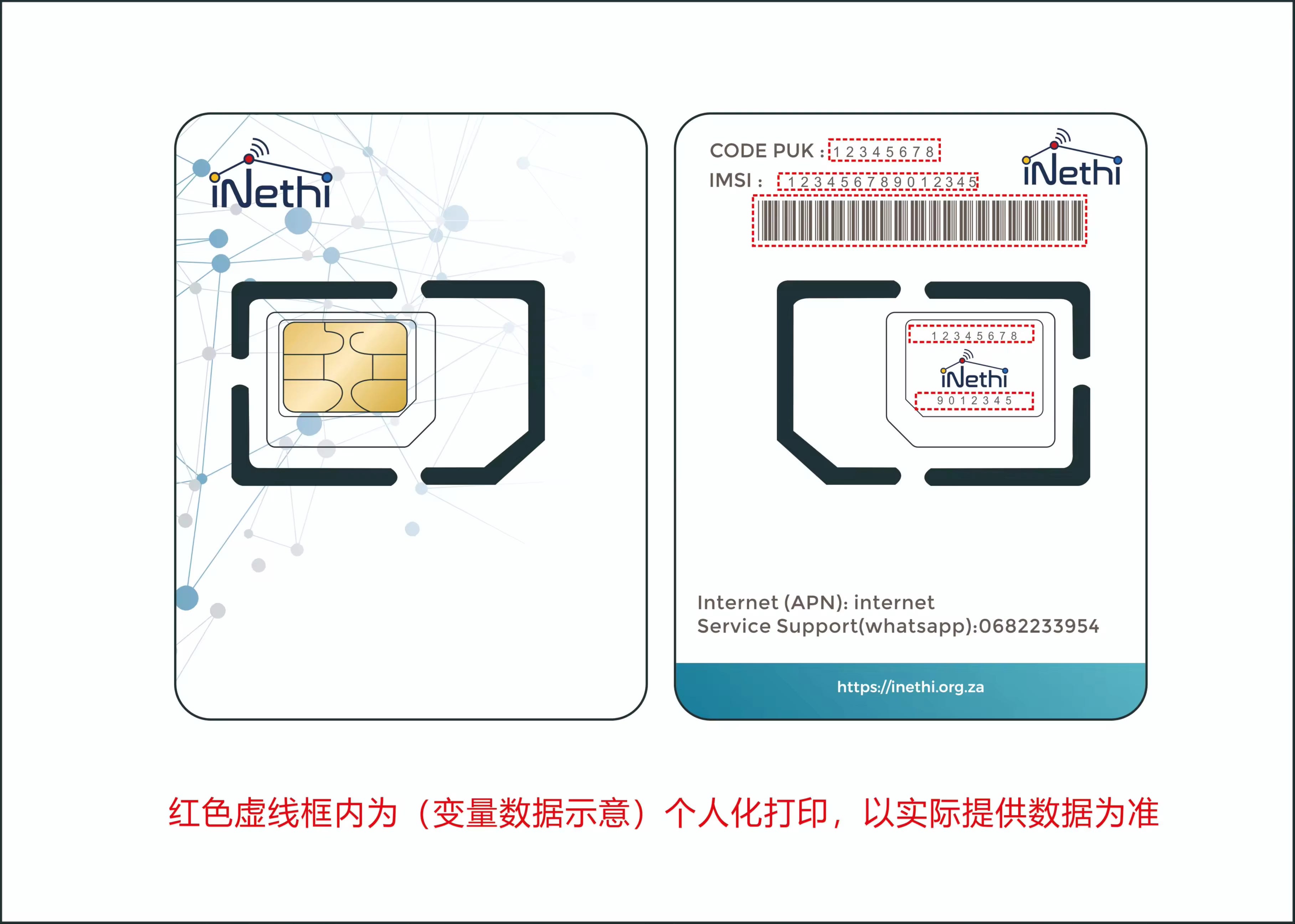
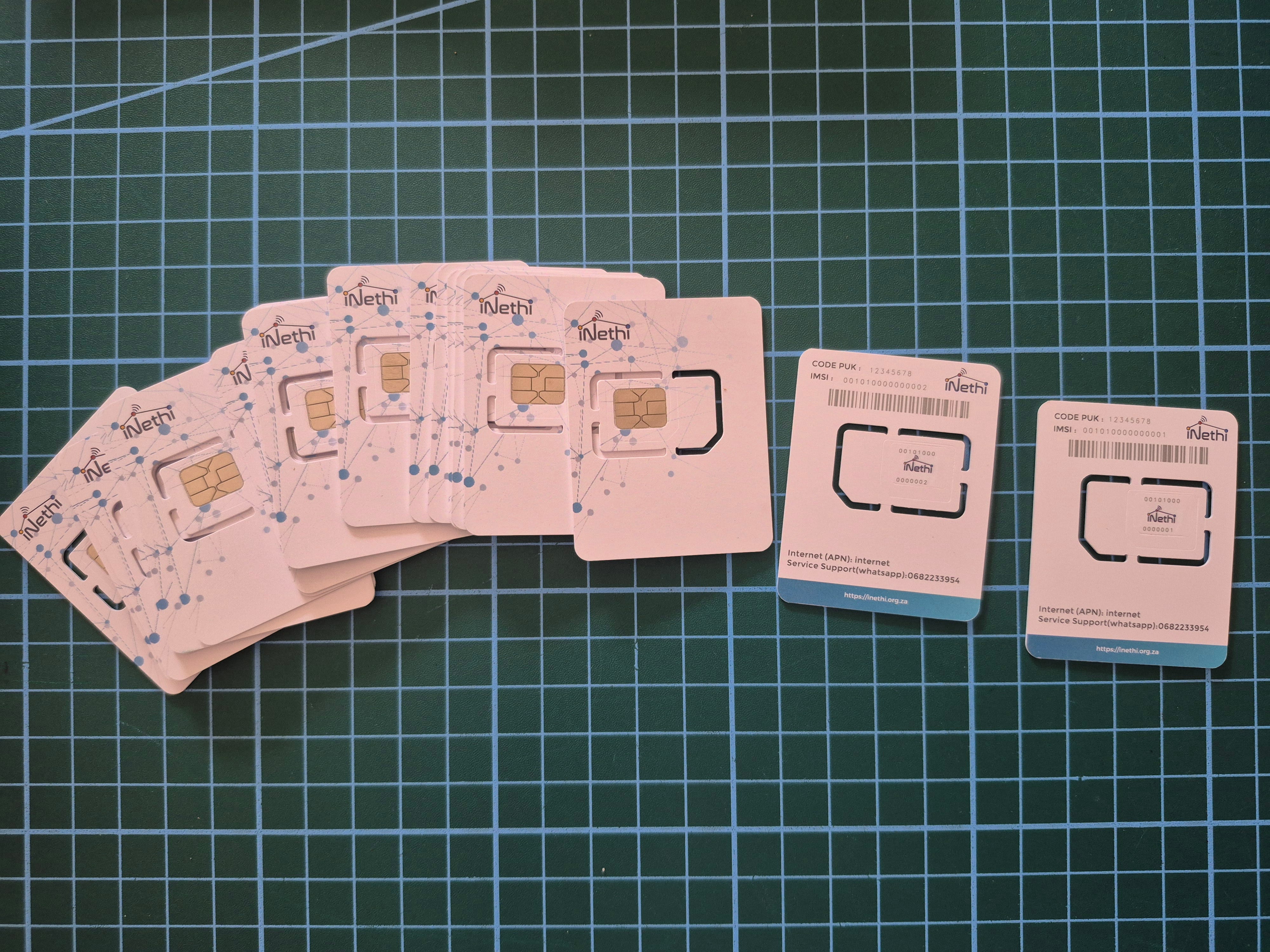
Below are our custom built SIM cards that arrived from China.
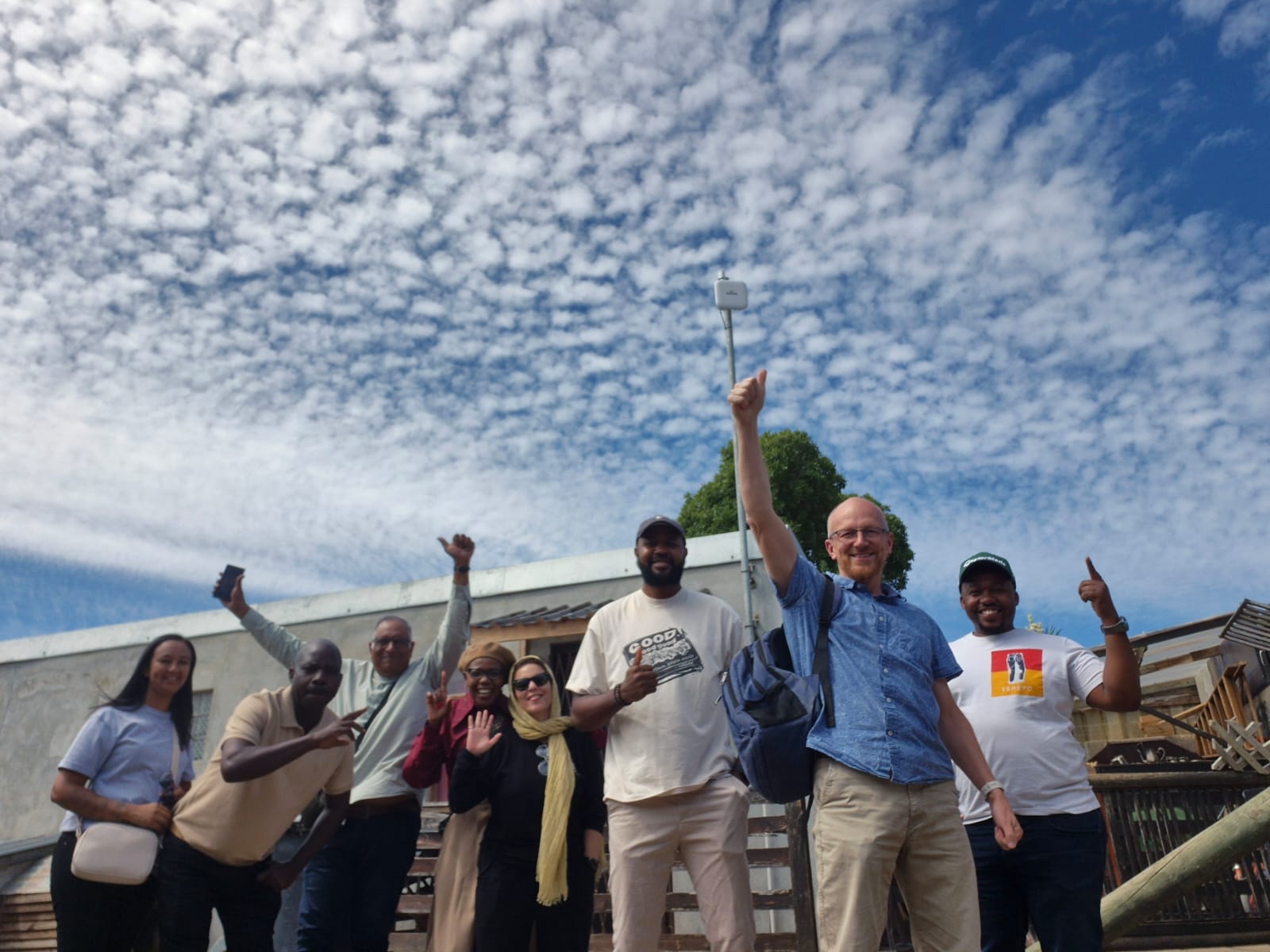
On 27 February, we hosted a workshop with other Community Networks in South Africa, including a site visit to Ocean View’s community cellular network. The session provided an opportunity to review their deployment plans and discuss implementation experiences within their respective communities. During the site visit, we conducted a live WhatsApp video call while walking through the community to demonstrate network performance. Participants were impressed by the quality and stability of the connection, which maintained a strong, clear video call even without line of sight, behind walls, and at distances of up to 1.2 km.
For many years, cellular coverage was assumed to require high capital expenditure, costly national spectrum licenses, and centralized high-cost management infrastructure. Our experience this month suggests a different possibility: that low-power LTE hardware, combined with open-source core networks and community-managed operational systems, can form a viable and affordable alternative.
Our final step in this journey is to demonstrate this value to the South African government and regulator, that have shown openness to allocating blocks of cellular spectrum for community networks and small ISPs. We aim to encourage the creation of regulations for shared-access spectrum licenses in bands that are well supported by mobile phones, similar to the model in the UK, where licenses are available for £80 per 10 MHz per site per year, as discussed in this article.